
Captain Dave had been somber and mostly quiet from the time of our introduction at LaGuardia Operations through our first leg to Chicago O’Hare International Airport (KORD). I found myself filling the void of conversation. It should have been a clue for what was to come.
At the gate in Chicago, I observed Captain Dave test the ancient RCA radar display on our B-727. Immediately after he commanded the flight engineer to call maintenance because the monochrome green screen was “spoking in the video band,” a glitch to which I was unfamiliar. I made the mistake of inquiring as to the technical nature of the problem. Without missing a beat Captain Dave growled and simply said, “Look it up.”
If you’re not already a subscriber, what are you waiting for? Subscribe today to get the issue as soon as it is released in either Print or Digital formats.
Although my motivation for the question was innocent, hoping to learn from an experienced pilot about operating a device that was more art than science, I should have read the room. Captain Dave most likely perceived that I was challenging his authority. Despite my effort to counter such a perception, it fell on deaf ears. The remainder of the three-day trip got even worse, and its details are etched in my memory to this day.
Thinking that I would surely be fired because of my defiant parting remarks upon parking the brakes at the end of the trip, notwithstanding my probationary status, the tactic was to go on the offensive. I contacted the chief pilot the following morning at our New York base, hoping he would have mercy on my soul after explaining the circumstances. He did. Captain Dave was a known problem child. The chief wished me a long and satisfying career.
- READ MORE: Airports Are Far From Just Another Piece of Concrete
- READ MORE: Why Airplane Reliability Matters More Than You Think
So, the obvious lesson learned was how not to be a Captain Dave. But perhaps a more challenging lesson would have been on how to maintain cockpit diplomacy despite a tyrannical captain. After the radar testing event, both the flight engineer and I realized we were dealing with a don’t-speak-until-spoken-to situation.
But staying stoically silent wasn’t the best solution, considering the cockpit of an airliner demands harmony, especially in an emergency. Captain Dave created a stressful atmosphere. Neither the flight engineer nor I were comfortable in providing input lest we be chastised. Nor were we at ease to banter about topics beyond the realm of cockpit operation. I vowed never to create such an environment when it became my turn to occupy the left seat.
So what could have been done in the interest of cockpit diplomacy? Even after the radar-testing incident, initiating a small-talk conversation may have deflected some of the acrimony. Where do you live? How long have you been with the airline? And so on. A minor taste of that tactic was initiated at LaGuardia, but the conversation remained mostly business.
It’s unlikely further small talk would have been successful with Captain Dave. Other than sticking to a strictly operational atmosphere, I should have suggested that he fly all the legs of the three-day trip. This would have avoided the barrage of corrections and commands presented during my time at the controls. Perhaps it would have served to reduce his stress of having to monitor a relatively new and unknown 28-year-old copilot, despite my B-727 experience from a previous employer.
Months later I had an involvement with a captain similar in personality. The flight engineer privately expressed to me that he was considering strangulation if he was scheduled to fly another trip with this man. It would probably not have been his best career choice. I employed the tactics described above, even to the extent that I invited the captain to share a dinner table with us when he sat down elsewhere by himself. That and other small strategies that subtly deferred to his ego defused most of the tension.
After upgrading to the B-757/B-767, I found myself periodically on the schedule with a small group of captains within the same seniority range at our New York base. I seemed to be paired with a particular captain for at least one trip every month. He was a rough-around-the-edges-type guy, difficult to maintain a conversation beyond a minute or two. He tended not to socialize on layovers. Not a big deal, but it made for stagnant trips on transcons across the country.
Attempts at finding a common interest usually fell flat. The captain wasn’t a micromanager or a tyrant, but on one of my B-757 arrivals into LaGuardia Airport (KLGA) he felt compelled to comment as we screamed toward the initial fix of the Expressway Visual Approach. “Do you think you might want to slow down?” he asked facetiously as more of a command than a question.
Granted, we probably could have slowed earlier, but I prided myself on managing our speed as a constant deceleration all the way to a stable approach by 1,000 feet. I addressed his legitimate concern by exclaiming with a smile, “Whaddya think I am? A damn rookie!?”
To this day I’m not sure what possessed me to react in that manner, but my captain chuckled and grinned from ear to ear. From that day forward we had lengthy conversations at cruise altitude and always had dinner together on our layovers. Who would’ve thought? I suppose it was reverse psychology in some form, but I wouldn’t necessarily recommend it even under similar circumstances. It certainly could have backfired.
Another captain that frequented my schedule was genuinely a nice man, but he had the social skills of a kidney stone. His interactions with flight attendants and ground personnel were sometimes lacking in finesse. I would often field the complaints, apologizing for his leadership style. My diplomacy was to offer soft “suggestions” on how better to accomplish a particular task that involved another employee. For my role, I found it best to acquiesce to his instructions unless they risked an eye being taken out or metal being scraped.
Once four bars made it to my shoulders, I hoped to incorporate the attributes of admired captains while dismissing the qualities of those captains not so admired. As a matter of fact, I applied more diplomacy toward my copilots, flight engineers, and flight attendants than with my former captains. One of the most important safety resources is your crew. Alienating them is not an option.
So, what qualities of diplomacy did I exercise? First and foremost, showing respect for my crew and respect for everyone involved with flight operations from the dispatcher to the person operating the belt loader. Next, I attempted to present a relaxed demeanor, which hopefully conveyed confidence. Another important aspect of diplomacy was to create an atmosphere that promoted input.
I often sprinkled in some self-deprecation as a sign that it’s OK to make mistakes. The cockpit is not quite a democracy, but you can diplomatically be assertive without seeming autocratic. The crew will respect a captain for such an attribute. Finally, a nonoffensive sense of humor goes a long way in maintaining a relaxed but effective cockpit operation.
Never having found my name scribbled nefariously on bathroom stalls, I’m hoping my leadership was effective and enjoyable—or at least tolerable.
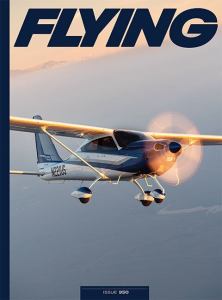
This column first appeared in the May Issue 970 of the FLYING print edition.