
Near-midair encounters occupy a peculiar place in aviation. They are not common events, but they are not rare either. Ask almost any experienced pilot and you will eventually hear a story about another aircraft appearing suddenly, far closer than anyone would prefer. General aviation operates in a system built largely on shared responsibility.
Unlike tightly controlled airline corridors or military formations, much of the GA environment depends on pilots seeing each other, communicating clearly, and maintaining constant situational awareness. Most of the time the system works extremely well. Occasionally, however, the margins narrow, and those moments can leave a lasting impression on a pilot.
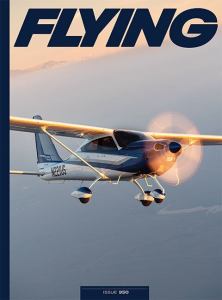
If you’re not already a subscriber, what are you waiting for? Subscribe today to get the issue as soon as it is released in either Print or Digital formats.
Training Flight Scare
Imagine a typical training scenario. A student pilot and instructor depart a nontowered airport on a routine night training flight.
The takeoff is normal. Correct radio calls are made on the CTAF frequency. Navigation lights, beacon, and landing lights are on. The airplane climbs out at best-rate speed.
Shortly after liftoff, as the aircraft climbs through roughly 1,400 feet msl, something appears in the pilot’s peripheral vision—red-and-green navigation lights moving across the departure path from the left. The aircraft is extremely close.
The student calls out the traffic and makes an immediate evasive maneuver, pulling slightly up and away. The other aircraft passes beneath and to the right. The entire event lasts only seconds.
- READ MORE: Pilots Must Recognize Not-If-But-When Scenarios
- READ MORE: One-Way-In, One-Way-Out Airports Pose Hurdles
Afterward comes a moment familiar to many pilots. Both people in the cockpit realize how little separation there was. The training flight continues, but the encounter stays on their minds.
Later, a review of flight data shows something sobering. The two aircraft’s ground tracks nearly overlapped, and their altitudes differed by roughly 100 feet. It also appears that the other aircraft’s ADS-B transmission began several seconds after takeoff, meaning the electronic traffic display never had time to provide a warning.
For a pilot early in training, that realization can be unsettling. It can also be an important lesson.
Night Flying Changes the Picture
Night flying introduces challenges that pilots must learn to manage carefully. Depth perception decreases dramatically in low light, and the human eye has difficulty judging distance using navigation lights alone. Two aircraft that appear safely separated can suddenly seem much closer as their paths intersect.
Helicopters can also add complexity. Their departure profiles are often different from fixed-wing aircraft. A helicopter may climb steeply, level briefly, or maneuver laterally soon after liftoff depending on its mission and operating procedures. When two aircraft depart the same area at roughly the same time, their flight paths can intersect quickly.
At nontowered airports, the system relies heavily on communication and vigilance. Radio calls on CTAF help build situational awareness, but they do not guarantee that every aircraft will hear or respond.
Technology Helps but Has Limits
Modern cockpit technology has greatly improved situational awareness in general aviation. ADS-B traffic displays, cockpit screens, and tablet applications allow pilots to see nearby aircraft in ways that were impossible only a generation ago.
However, these tools have limitations. Some ADS-B systems take several seconds after start-up before they begin transmitting. If an aircraft has not yet begun broadcasting, there is nothing for other aircraft to receive. Even when systems are working normally, ADS-B information can contain small delays or gaps in coverage.
Tablet applications such as ForeFlight provide helpful traffic alerts, but they are not certified collision-avoidance systems. They function as advisory tools that supplement, rather than replace, the pilot’s responsibilities.
Because of this, the hierarchy of collision avoidance in aviation has remained largely unchanged for decades. The pilot’s eyes come first. Radio awareness adds another layer of protection. Electronic traffic systems follow, and cockpit software provides additional information. Technology can assist the pilot, but it cannot replace the basic discipline of scanning the sky.
When Training Works
In the scenario described earlier, several important things happened exactly as they should. The pilot made proper radio calls and operated the aircraft with the appropriate lights on. The climb was conducted at the correct speed, and traffic was visually detected in time to react. The evasive maneuver occurred immediately, and the flight continued safely.
Those actions reflect the fundamentals of safe flying. Training is designed to build habits that
allow a pilot to recognize a threat quickly and respond without hesitation.
Interestingly, the digital data from a flight can sometimes appear more dramatic than the event itself. Ground tracks plotted on a screen can make aircraft look almost superimposed, and altitude reports may contain rounding or small delays. In reality, aircraft climbing or descending can change vertical separation rapidly. Still, a hundred feet of separation is close enough to command respect.
One of the more difficult truths about aviation is that even when pilots do everything correctly, risk still exists. Weather can change. Equipment can malfunction. Other aircraft may appear unexpectedly. The aviation system manages these risks remarkably well, but it cannot eliminate them entirely. That is why vigilance remains a constant requirement in the cockpit. Most experienced pilots eventually experience at least one close call. Sometimes it happens years into a flying career. Occasionally, it happens early in training. When it does, the event becomes a powerful teacher.
Finding the Right Balance
Aviation requires a balance between two qualities that may seem opposite—confidence and respect. Confidence allows pilots to act decisively and continue learning, while respect for risk keeps them disciplined and alert.
Too much confidence without respect can lead to complacency. Too much caution without confidence can create hesitation at the wrong moment. Safe pilots learn to maintain both. Experiences like a near-midair encounter often become the moment when that balance begins to develop.
Flight training is full of milestones—the first solo, the first cross-country, the first night flight. Equally important are the quieter lessons that shape judgment and awareness. A close encounter can reinforce the fundamentals that keep aviation safe—continuous visual scanning, clear communication, and disciplined decision-making. These habits become part of a pilot’s mindset long after the event itself fades into memory.
In the end, the most important outcome is simple. The traffic was seen, a maneuver was made, and both aircraft continued flying safely. That result reflects what aviation training is designed to achieve—awareness, reaction, and safe resolution when margins narrow. Experiences like this remind pilots that flying demands constant attention and respect. They also demonstrate that when training takes hold, it can make the difference when it
matters most.
This column first appeared in the July Issue 972 of the FLYING print edition.