


The aviation industry has a math problem.
Federal labor projections estimate roughly 18,500 pilot job openings annually in the U.S. over the next decade, fueled by retirements and evolving commercial and general aviation needs post-COVID. Airlines are hiring aggressively and regionals are scrambling to fill seats. The demand signal is quite clear in the numbers, but recruitment isn’t improving.
For thousands of aspiring aviators, the cockpit seems unattainable because of steep entry costs. Quality flight training programs can run close to six figures, and without a clear financing pathway, many motivated students never get past the research phase. It’s a bottleneck the industry can no longer afford, and one that Scottsdale, Arizona-based Sierra Charlie Aviation (SCA) is working to eliminate.
In February, SCA announced a new financing option through Sallie Mae, giving students access to the Sallie Mae Airline Career Loan, which was purpose-built for professional pilot training programs.
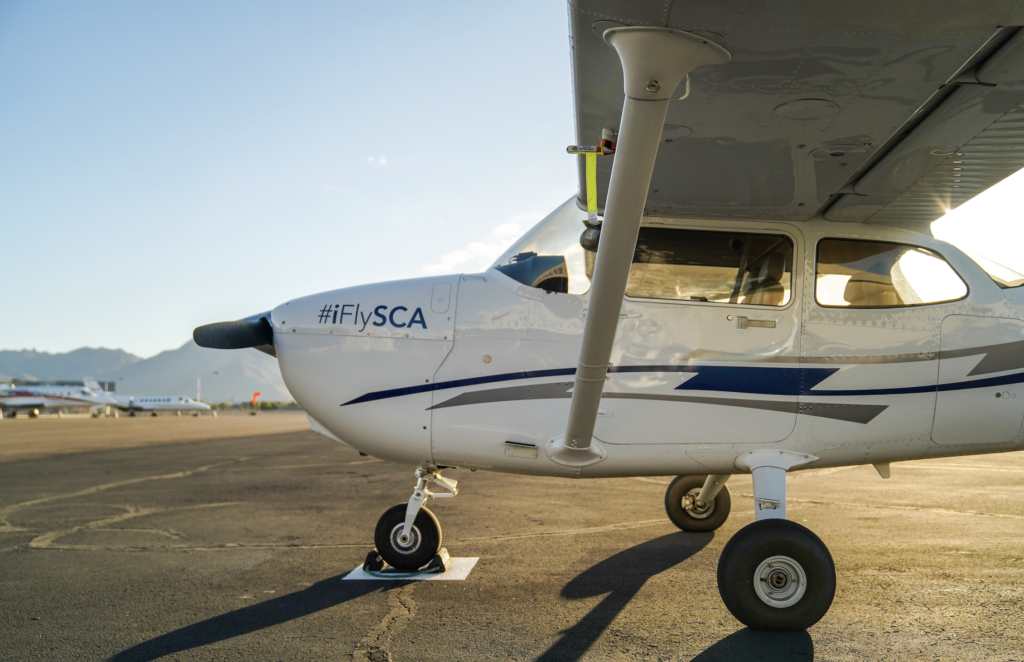
Sierra Charlie Aviation was founded in 2015 by Scott Campbell, a CFI with a family history steeped in aviation. His grandfather was a pilot and his mother a flight attendant, and both encouraged his love of flying. What started as a small operation at Scottsdale Airport (KSDL) has since grown into a nationally recognized training program with Arizona operations in both Scottsdale and Chandler.
The school earned Cessna Pilot Center designation early on, and that distinction is reserved for a limited number of flight schools worldwide that meet the manufacturer’s rigorous training standards. From there, the recognition kept coming: Aircraft Owners and Pilots Association Flight Training Excellence Awards across multiple years, including Best Flight School in the Western Pacific Region. Campbell himself was named AOPA’s Best Flight Instructor in the Southwest Region.
What really separates SCA from the pack is its training model. The school operates under FAR Part 61 rules, which afford students considerably more flexibility than the lockstep structure of Part 141 programs. This also allows SCA to constantly use data to update syllabi or training material without awaiting a lengthy FAA approval, giving the students constantly the highest level of training.

“Flight training should be accessible to all motivated students, not limited by rigid institutional structures or financial barriers,” Campbell said.
Every aircraft on SCA’s ramp looks like it just rolled out of the factory, because most of them did. The school’s fleet is composed mostly of factory-new Cessna 172 Skyhawks equipped with Garmin G1000 NXi avionics and GFC700 autopilot systems.
For multiengine work, SCA operates a few Piper PA-44 Seminoles fitted with G1000 NXi and a Terrain Awareness Warning System. Backing it all up are five Alsim AL172 full-motion simulators, exact digital replicas of the school’s Skyhawks, right down to the avionics panel. SCA is the biggest operator of these simulators in the entire United States.

The school’s flagship offering, the Aviator Career Program, is a structured, full-time curriculum designed to take students from zero flight experience to commercial pilot certification in approximately 12 to 14 months. The program is all-inclusive and covers every rating, check ride, training material, and hour of ground school along the way.
SCA is already a leader in professional pilot training, but the school’s new collaboration with Sallie Mae is going to broaden access to professional pilot training. The industry is waking up to the fact that Part 61 schools like SCA are producing career-ready pilots on competitive timelines.
The Sallie Mae Airline Career Loan gives qualified students an additional financing option to begin or complete their training without compromising on the flexibility or instructional quality that defines the SCA experience. If you’re a prospective student who’s been sitting on the fence due to finances, this could be what finally gets you off the ground.
With 18,500 cockpit seats to fill every year, the industry needs you there.
For more information, visit SierraCharlieAviation.com.