
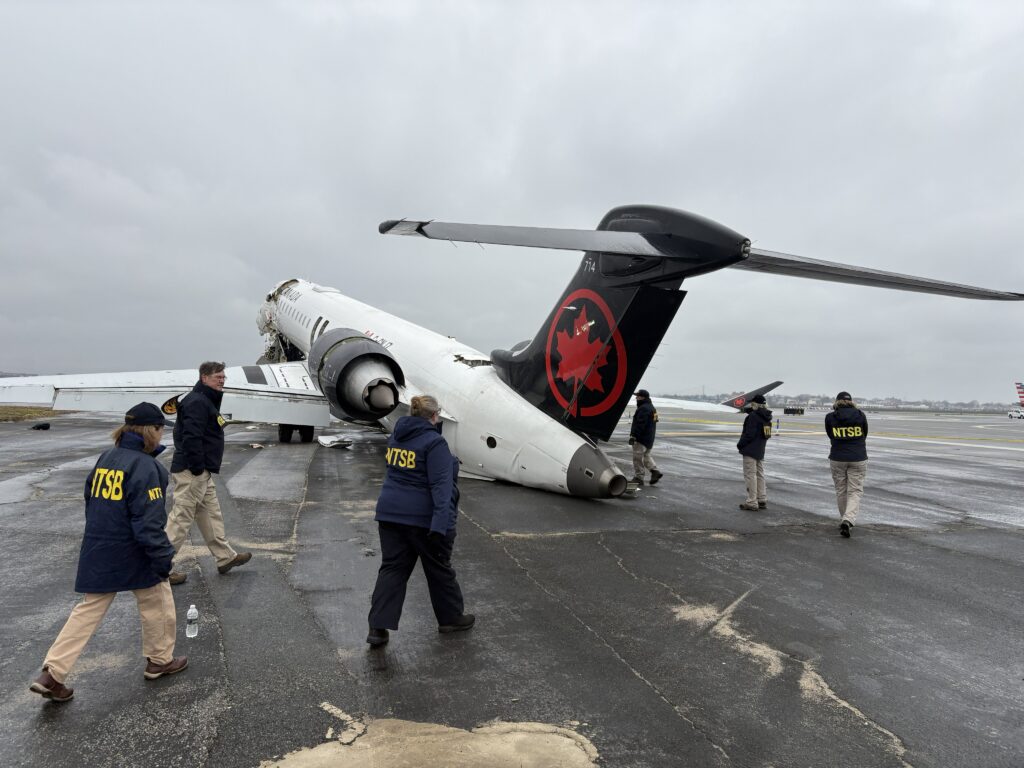
There were two air traffic controllers (ATCs) in the tower overseeing LaGuardia Airport (KLGA) at the time of Sunday night’s fatal collision, the National Transportation Safety Board said Tuesday, a figure that is considered standard for the midnight shift at the airport and across much of the nation’s airspace.
Still, questions remain about how many staff overall were at the ATC facility at the time of the crash and what roles the controllers in the tower were filling.
Around 11:40 p.m. EDT, a controller cleared a firefighting truck to cross LaGuardia’s Runway 4. Seconds later, the vehicle was hit by an Air Canada flight arriving from Montreal.
“It is not clear who was conducting the duties of the ground controller,” NTSB Chair Jennifer Homendy told reporters at a news conference at the airport. “We have conflicting information. We have some information saying it was the controller in charge, we have some information saying it was the local controller.”
Homendy noted that while staffing levels that night were normal, investigators have seen problems occur on the midnight shift before.
“The midnight shift, as a reminder, is one that we have many times at the NTSB raised concerns about with respect to fatigue,” she said. “Again, I do not know. We have no indication that was a factor here, but it is a shift that we have been focused on in past investigations.”
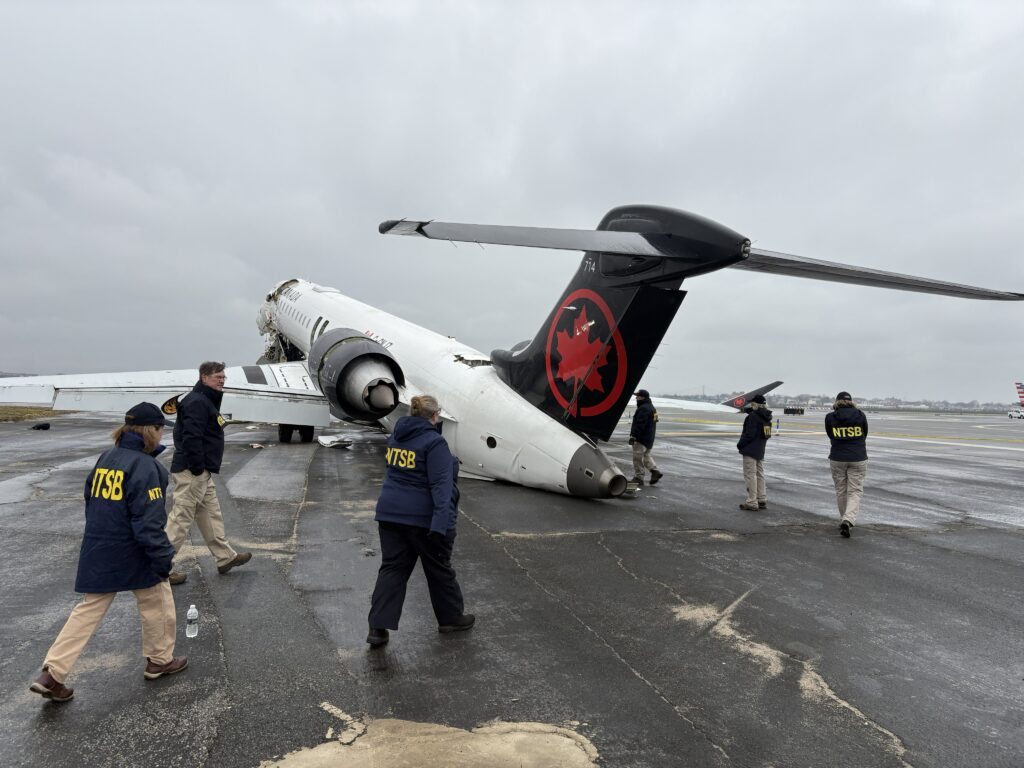
The NTSB released several other new details about the chain of events leading up to the crash, which killed two Air Canada pilots and injured dozens of other people.
Perhaps most notable, LaGuardia’s ASDX runway safety system did not alert.
“ASDX did not generate an alert due to the close proximity of vehicles merging and unmerging near the runway, resulting in the inability to create a track of high confidence,” Homendy read from an analysis of the system’s performance.
Officials also revealed that the fire truck did not have a transponder.
The vehicle was on its way to a United Airlines flight that experienced two aborted takeoffs and was reporting fumes in the cabin.
Responding to media reports about “distractions” among controllers at LaGuardia, Homendy said ATCs handle many responsibilities and perform admirably under even very difficult circumstances.
“I would caution pointing fingers at controllers and saying distraction was involved,” she said.
The chairwoman also noted that the nation’s air transportation system is complex, with many safeguards built in, making it highly unlikely that a single mistake alone could trigger an accident.
“When something goes wrong, that means many, many things went wrong,” she said.