Never be in a hurry when it comes to getting an airplane out of a hangar, its parking spot, or across the ramp. Haste, as they say, makes waste and often results in expensive repairs when a wingtip hits a wall or another wingtip.
Who else has seen someone taxiing across a ramp like they are driving a car in a semi-empty parking lot? It can be downright dangerous, not to mention expensive when pilots try to drive across the ramp, taking a shortcut through the parking places and sometimes turning a wooden chock or a tie-down into a projectile—or, worse yet, clipping the wing or tail of another aircraft because from the pilot seat it can be challenging to gauge how close you are getting to objects off your wingtips.
There is a reason traffic lines are painted on the ramp. Stay on that line and, provided the other aircraft are properly parked, you won’t hit them. I stress the word “properly.” If you park cattywampus, it makes it difficult for everyone.
It is distressing to come back to your airplane after a meal at the airport diner or some other activity and notice a scrape in the paint or a ding that was not there before. You are now sporting a case of “hangar rash.” You may know someone who has been the victim of ramp rash and never found out who did it.
Tips for Daytime Operations
When taxiing out of a parking bay in the daytime with many aircraft nearby, take note of the shadows on the ground. If the shadows touch, the wings will touch. You may need to walk the airplane out of its parking stall before the engine start.
- READ MORE: How to Control Your Aircraft on the Ground
- READ MORE: Spring Into Action: Welcome Back to the Cockpit
You also may need someone to act as a wing walker. Make sure to give them instructions to help you achieve the goal of keeping the wingtip from colliding with something.
I stress this because I witnessed the aftermath of a wingtip of a J-3 Cub colliding with the wing of a Cessna 172 because the only wing walker the Cub owner could find was one of the women who worked in the pilot supply shop. She was not a pilot, and when he asked her to “watch the wing” as he pulled the aircraft out, she did, watching as it collided with the plastic wingtip of the Cessna. There was some paint transfer but no structural damage.
Even if the ramp is devoid of aircraft, taxiing a shortcut across it is foolish. Tie-down spaces are rarely completely empty. There are usually wooden chocks, tie-down straps, ropes, or chains lying on the ground. Hit any of these with the propeller, and it’s going to be a bad day, especially if the propeller splinters the chock or severs the strap and turns it and the metal on the end of it into a projectile, and part of the chain or strap wraps around the propeller.
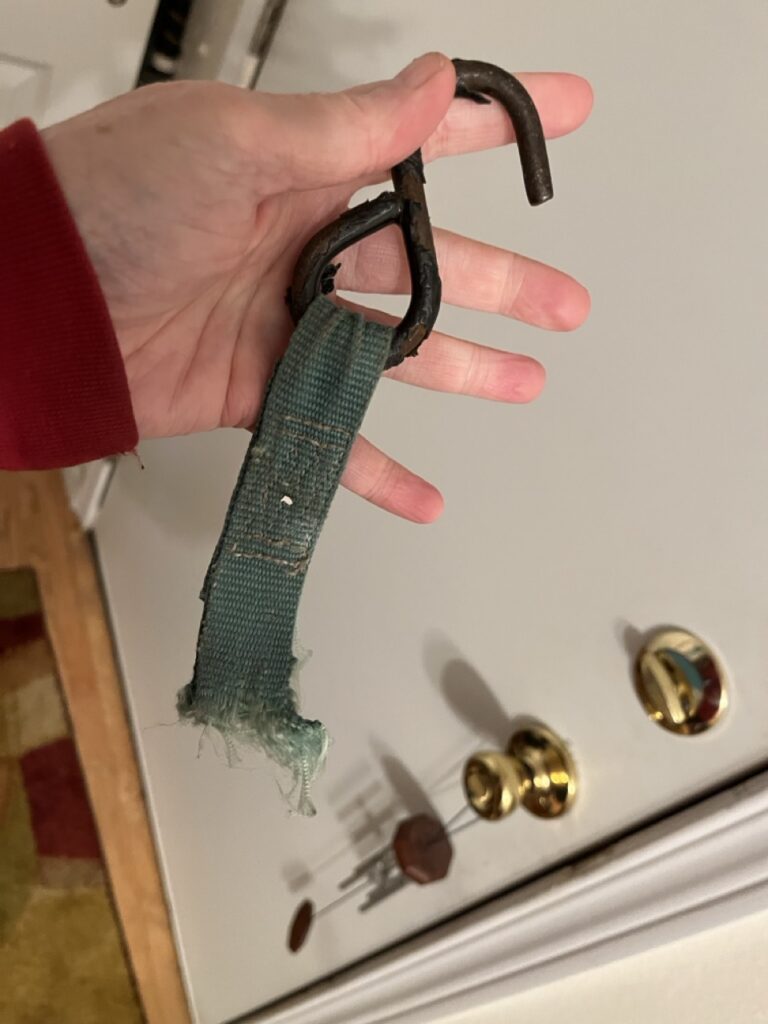
I have one of those hooks as a teaching tool. It caught me in the shin one Sunday morning. It was a bright spring day, just after sunup. The ramp was fairly empty, and a pilot who was taxiing across the ramp got one of the flight school tie-down straps caught in his propeller. There was a loud ping, and then the metal hook and a few inches of the green tie-down strap shot across the ramp, skipping like a stone. The pilot, apparently unaware of what had just happened, spun his airplane around and shut down next to the fuel pump.
The pilot was surprised to learn he’d hit something—even when I showed it to him. Then he changed his tune when he got a closer look at his propeller. There were marks along the edge of it and what was left of the green nylon strap, all broom strawed, wrapped around it. The attempt to save time turned into an expensive detour as the aircraft owner asked for the mechanic to inspect the airplane.
Beware of FOD
Following the lines painted on the ramp doesn’t guarantee you won’t strike something. You have to keep your eyes peeled for foreign object debris (FOD)—things that don’t belong on the ground.
Don’t be surprised if you see the occasional damaged wheel chock (or part of one), fuel strainers, yoke clips, pitot sock covers, pens, water bottles, iPads, sunglasses cases, or smartphones on the ramp. Try not to run them over, and taxi in such a fashion they cannot get sucked up by the propeller.
Be mindful of drains or grates along the path, especially in low light situations when you can’t see if the hole that is supposed to be covered actually is. I say this because there was one summer when these items were being stolen from the airport and sold for scrap iron. The flight schools were warned to take extra care when taxiing at night so as not to have a wheel go into a hole creating a potential prop strike.
Be extremely careful when there are people on the ramp. They may be pilots who have the sense to get out of the way, or they may be aviation novices who come running toward the airplane when you still have the prop spinning.
The worst are the pilots who intentionally propwash other pilots because they think it’s funny. It’s not.
Parking Challenges
Sometimes you have to get creative when your usual parking is not an option.
I had just returned from a night flight with a client. Just as we touched down, the fog arrived, so much so that, at the client’s request, I took the controls to taxi us to parking. I slowed down—we’re talking snail slow—because the fog was doing a good job of hiding the runway and taxiway lights.
Fortunately, the lighted windsock atop the fuel island was visible above the fog layer, so I had a pretty good idea when the turnoff to the flight school ramp was, but I couldn’t see the designated tie-down spaces.
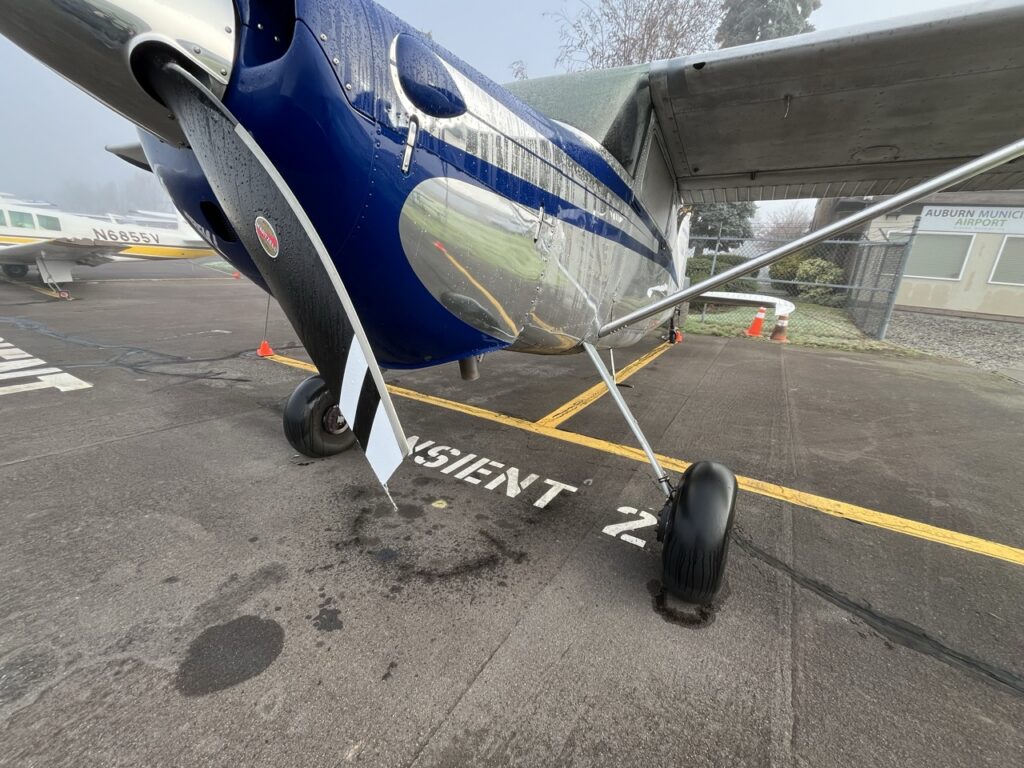
The two transient tie-downs on the far east end of the rows were barely visible and clearly empty. There had been an increase in flight school pilots parking in the transient spots of late because it was easier to “drive in” to them rather than shut down the aircraft and use the towbar to maneuver the airplanes into the school’s designated parking spots.
Parking was an issue, as the airport manager had been somewhat cross after finding flight school airplanes in the transient spots. The transient spots were for visiting aircraft and cost $5 a day. When the transient pilots learned they had to pay for parking, they started parking in flight school spots. This upset the airport manager and made the chief flight instructor raise a stink that lingered.
Between the option of potentially bending metal and getting yelled at by someone, I chose door No. 2. After we secured the airplane in a transient spot, I left an apologetic voicemail on the airport manager’s cell phone. I explained the hostile fog, lack of visibility, and my decision as PIC to park in the transient spot to avoid bending metal. I also promised to be out there at first light to reposition the airplane—and I was.
The sun was just starting to rise as I was out there, towbar in hand, ready to move the airplane. As I was attaching the towbar to the nose, the airport manager drove up, laughing. She said the voicemail was the nicest thing she’d heard in a long time since no one usually apologized for breaking the airport rules. Then she helped me park my aircraft in the proper place.