The question that matters most for many aspiring airline pilots is what happens after they get their certificates. Most flight schools don’t offer much in terms of an opportunity to build instructor hours after certification ends. On that front, US Aviation Academy is in a unique position.
The Denton, Texas-based academy, now celebrating its 20th year of operations, has grown from a single building and a handful of aircraft into one of the largest professional pilot training platforms in the U.S., with 275-plus aircraft across 12 campuses. But the development that has reshaped the school’s competitive position more than any other came in December 2025, when the U.S. Air Force awarded US Aviation Academy an $835 million, 10-year contract to provide Initial Pilot Training (IPT) for Air Force flight officers.
That headline would make any flight school proud. But according to Mike Sykes, CEO and founder of US Aviation Academy, the real story is what that contract does for civilian students.
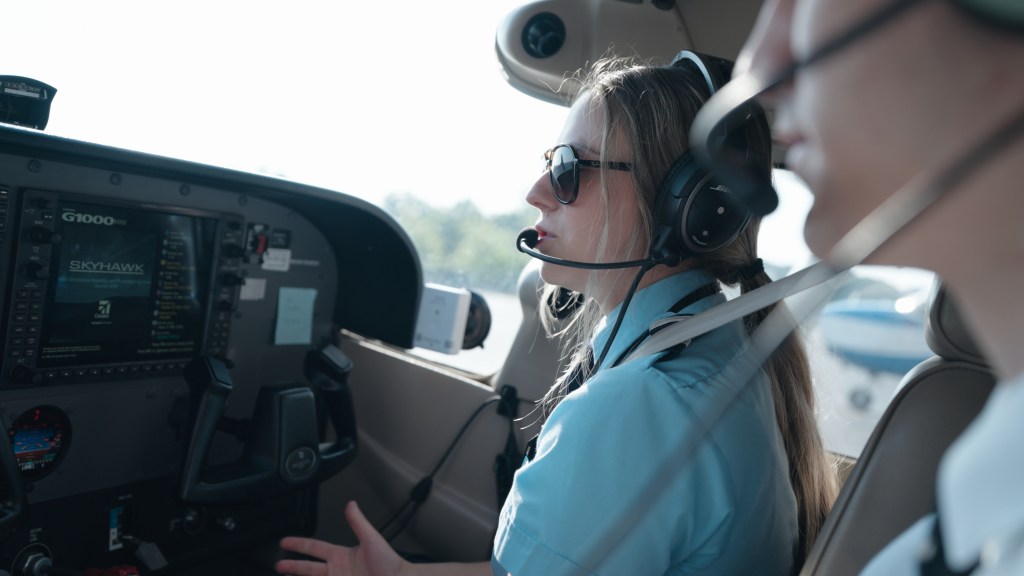
There’s a well-documented gap in the professional pilot pipeline that sits between earning a commercial pilot certificate with a CFI rating and accumulating the 1,500 flight hours required for an airline transport pilot (ATP) certificate. For most graduates, the path across that gap runs through a CFI job, instructing other students while building hours toward the airlines.
The problem is that most flight schools can’t hire all of their graduates as instructors. Supply outstrips demand. A school might turn out hundreds of qualified CFIs each year but only need a fraction of them on staff.
“Another company might train 2,000 students per year, but only about 30 percent can be hired as CFIs,” Mike Sykes said. “If you go to a competitor, 60 percent of instructors are going on a wait list and can’t get hired.”
That’s not a hypothetical for Robert Renfro, vice president of marketing at US Aviation Academy. Renfro previously owned a flight school called Kilo Charlie Aviation and saw the problem firsthand.
“I saw graduates that were waitlisted, looking for other CFI jobs,” he said. “That’s an issue we solve with the Air Force contract.”
Here’s where the Air Force contract flips the equation.
US Aviation Academy’s civilian program—what the school calls its “Zero to Hero” track—produces graduates who earn their CFI ratings and are ready to instruct. Meanwhile, the Air Force trainees who flow through the same campuses are there for foundational flight training only. They complete their private pilot, instrument, and multi-engine ratings, and then move directly into military career pipelines. They have no need or intention to stay on as flight instructors.
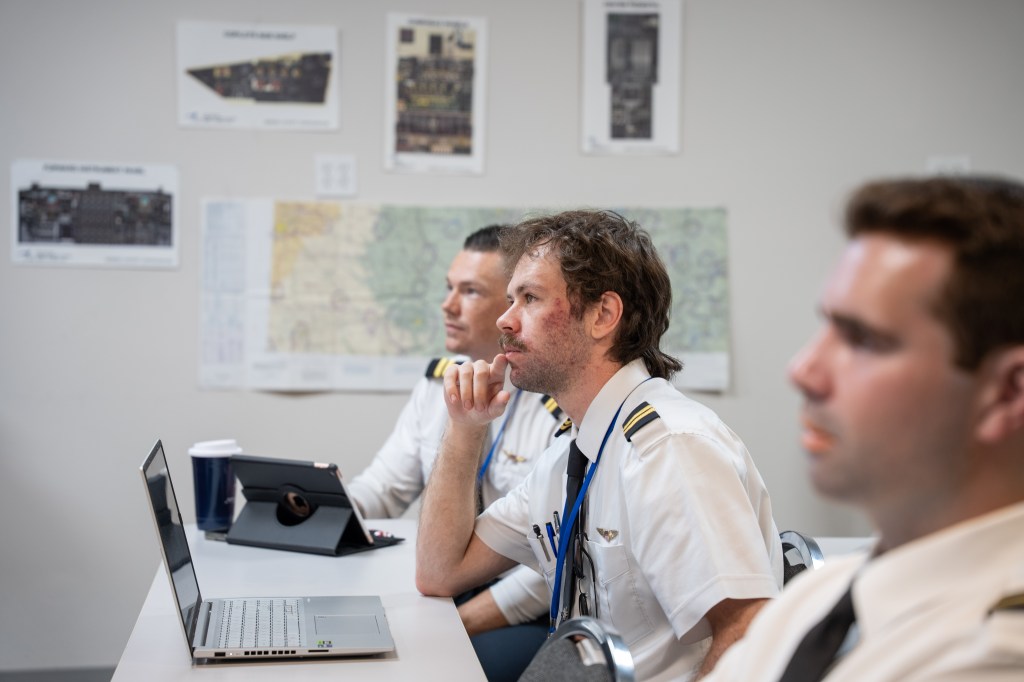
“If we have 1,000 Air Force pilots in training and 600 pilots in our retail Zero to Hero program, there’s an imbalance in how many instructors we need versus how many graduates will stay on to be certified flight instructors with us,” Renfro said. “Those 1,000 Air Force pilots have zero interest in being CFIs and getting hours in. We need our retail pilots to get to their CFI to then train our Air Force officers.”
The result is a hiring rate that most flight schools can’t come close to matching. Scott Sykes, US Aviation Academy’s chief development officer, said that the flight school is capable of hiring virtually every graduate.
“We hire 95 percent of graduates out the door,” Scott Sykes said. “We need more instructors than we do pilots.”
That distinction is enormous for any prospective student who seriously wants to enter a career in aviation. Rather than finishing a $80,000-plus training program and joining a crowded waitlist of newly minted CFIs competing for a limited number of seats, US Aviation Academy graduates step into a built-in employment pipeline where demand for their services already exceeds supply.
Competitors, particularly near the academy’s Atlanta-area campus in Peachtree City, Georgia, have seized on the Air Force contract as a marketing weapon, suggesting that US Aviation Academy is now primarily a military training operation and that civilian students are an afterthought.
Renfro doesn’t mince words in his response.
“Competitors down the road are telling prospective students to avoid us because we’re just a military installation, but that’s far from the truth,” he said. “You might see a lot of Air Force pilots on our campus, but that doesn’t take away from our commercial training at all. Quite the opposite, in fact.”
The academy maintains dedicated aircraft allocations for each training segment, and US Aviation Academy gives its civilian pilots no less attention than it would have prior to the Air Force contract.
The hiring advantage would be enough to differentiate the academy on its own, but Scott Sykes said it’s one piece of a broader career support infrastructure that extends well past the classroom.
US Aviation Academy maintains direct hiring partnerships and cadet programs with a roster of major and regional airlines that includes United Aviate, Southwest Destination 225°, Endeavor Air, SkyWest, Republic, Breeze, Avelo, and Southern Airways Express. According to Renfro, those aren’t the casual affiliations that many flight schools advertise.
“If you go to a smaller flight school that charges $80,000 for ratings, you’ll be thrown into a pool of other CFIs looking for scraps in the job market,” Scott Sykes said. “That’s a hard path to find a job. If you’re looking to make a career, you’ve got to be in a place that can hire you, has a source to get you 1,500 hours, and from there has commitments with commercial employers.”
The academy also offers its students an advisory board that provides career guidance from initial enrollment through airline placement.
“We take you from zero experience to an airline pilot,” Scott Sykes said. “Our advisory board will get you to your desired path.”
Mike Sykes said that leadership at US Aviation Academy always emphasizes that the job is not done when a student gets their CFI license.
“As a flight school, if you advertise yourself as a career school, you should be doing the things that actually get students set up as airline pilots,” he said. “Other flight schools can provide the certifications, but that doesn’t get you hired.”
Even the hour-building phase is structured for efficiency.
“…As a CFI, once you start flight instructing, it takes years to build 1,500 hours,” Mike Sykes said. “We can get CFIs the hours in a reasonable time.”
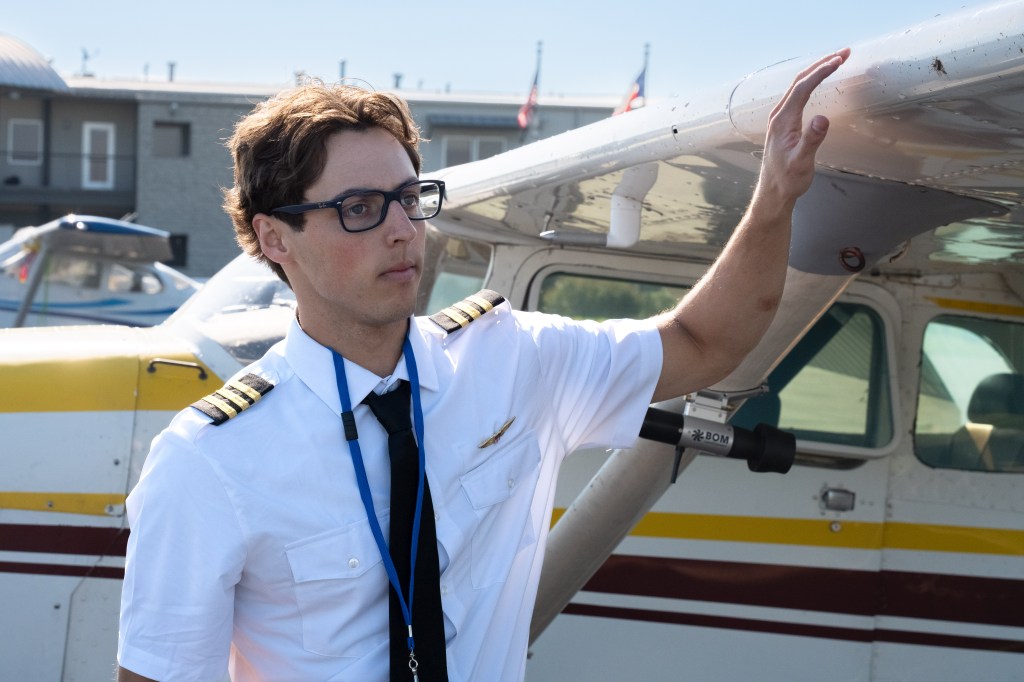
If you’re evaluating the increasingly crowded field of professional flight training programs, the calculus at US Aviation Academy looks different than it does almost anywhere else. The Air Force contract has created a structural employment advantage that directly benefits every retail student who enrolls.
If a career in aviation is your ultimate goal, certifications are just the entry ticket. At US Aviation Academy, the path between certifications and employment is shorter, more certain, and better supported than what most of the industry can offer.
“Our job isn’t done until you have an offer,” Mike Sykes said.